Electric vehicle charging is moving from a simple plug-in service to a connected energy system. Drivers now expect faster sessions, clearer pricing, and dependable access. Fleet operators need more than impressive charger ratings. They need equipment that works during heat, rain, traffic, and grid constraints.
So, what are the latest trends in ev charging technology? In 2026, the answer includes high-power charging, bidirectional energy flow, intelligent load management, and wider use of on-site battery storage. Some public sites are testing chargers above 350 kW, while heavy-duty fleets are exploring megawatt-scale systems. However, not every vehicle can accept maximum power. That difference still confuses customers.
Field experience shows that reliability matters more than headline speed. A charger with a dark screen or a failed payment reader creates frustration within minutes. Charging engineers are therefore focusing on remote monitoring, predictive maintenance, standardized communication, and easier authentication. Plug and Charge can reduce steps, but compatibility remains uneven across vehicles and networks. Cybersecurity is also becoming central as chargers connect with homes, fleets, and utility platforms.
This guide examines these developments through practical use cases, industry standards, and real operating challenges. It considers apartment buildings, highway stations, workplace parking, and commercial depots. The transition is promising, but not perfectly organized. Some forecasts may prove optimistic. Hardware costs, permitting delays, and local grid capacity can slow adoption. Understanding those limits helps businesses and drivers make safer, more reliable charging decisions in 2026.
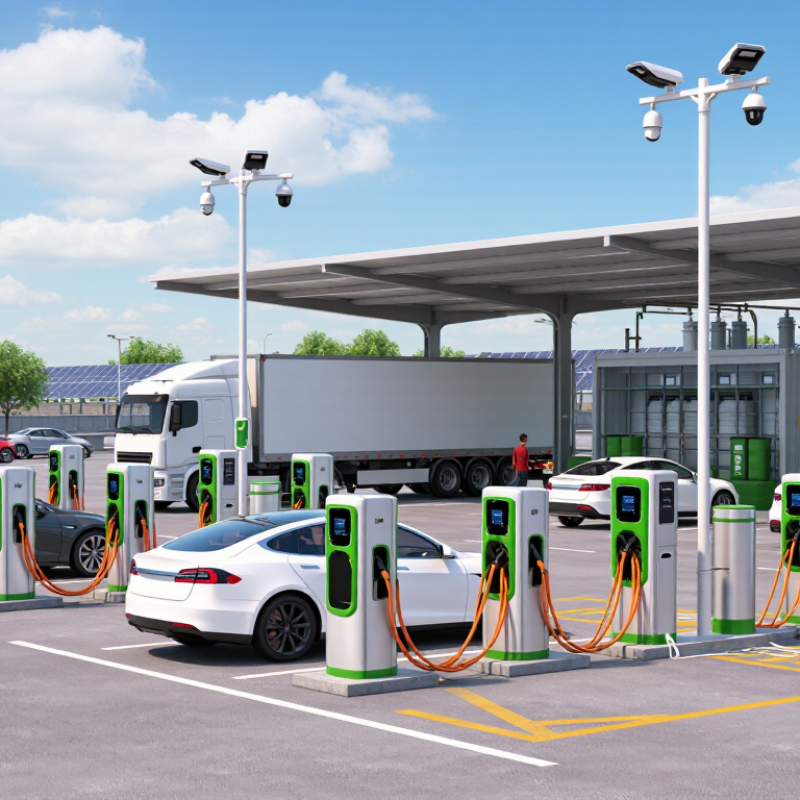
What Are the Latest EV Charging Trends for 2026?
EV charging in 2026 is shifting from simple expansion to dependable, data-led infrastructure. The International Energy Agency reported more than five million public charging points worldwide at the end of 2024. Over 1.3 million were added during that year. This growth is visible in city car parks, roadside stations, and apartment blocks.
High-power charging remains important, but it is not the only market driver. Fleet operators increasingly need overnight depot charging, while urban drivers need reliable curbside access. The National Renewable Energy Laboratory highlights managed charging as a practical way to reduce peak grid demand. Smart software can delay charging by twenty minutes, then restore power before morning travel. Small changes matter.
Interoperability is also becoming a competitive requirement. Drivers expect clear pricing, accurate availability data, and payment systems that work across networks. The U.S. Department of Energy continues to emphasize uptime, cybersecurity, and open charging data in infrastructure guidance. A fast charger that is offline remains an expensive metal cabinet. This sounds obvious, yet deployment figures often receive more attention than actual service quality.
Battery size creates another complication. Larger batteries can reduce charging frequency, but they increase electricity demand at busy sites. Forecasts may still overestimate public-charging utilization in smaller cities. Operators should test local traffic patterns, parking duration, and grid capacity before copying dense urban models. In 2026, the strongest charging projects will connect hardware, software, property planning, and real driver behavior.
In 2026, EV charging is moving from maximum power toward usable speed. New high-output stations can deliver several hundred kilowatts under suitable conditions. However, the vehicle’s battery must accept that power safely. Temperature, charging state, and battery age still affect the actual result.
Battery preconditioning is becoming more important. It warms or cools the battery before arrival at a charging station. This can reduce waiting time during cold mornings or hot afternoons. Liquid-cooled cables also support higher current without becoming uncomfortable to handle. The experience feels quicker, but not always dramatically so.
Compatibility is improving through wider voltage support and smarter communication between vehicles and chargers. Stations can now adjust current more precisely for different battery designs. Better software may also identify charging limits before a session begins. That reduces failed starts and unexpected slowdowns. Small details matter.
Yet faster charging is not automatically better. Repeated high-power sessions may increase battery stress when thermal control is poor. Drivers still need clear information about charging curves, not only peak figures. I have seen impressive specifications create unrealistic expectations. A charger rated for extreme output may deliver much less power after the battery reaches a high state of charge. Reliability, accurate pricing, and simple payment methods remain just as important as speed.
Public charging networks are moving beyond highways and city centers. More stations now appear near supermarkets, apartment buildings, workplaces, and community facilities. This wider coverage helps drivers charge during ordinary routines, rather than planning a separate trip.
Destination charging is becoming especially important. A hotel car park, cinema, or office garage can provide several hours of charging while visitors stay inside. In practice, clear signs matter as much as charging speed. Drivers need to know the space is reserved, the connector is compatible, and the payment process is simple.
Reliability remains a serious concern. A fast charger that is unavailable, blocked, or poorly maintained creates frustration quickly. Network operators are therefore focusing on remote monitoring, regular inspections, and easier fault reporting. Some sites also combine different power levels, serving both short stops and longer visits.
Accessibility must improve too. Charging bays need adequate lighting, usable cable lengths, and enough room for different vehicles. Apartment residents may benefit from shared chargers managed through fair scheduling systems. Yet expansion is not flawless. Local grids can struggle with heavy demand, and construction can take longer than expected. I would also question plans that measure success by charger numbers alone. A smaller, dependable network may serve drivers better than a larger network with frequent outages.
What Are the Latest EV Charging Trends for 2026?
Smart Charging, AI Management, and Grid Integration
In 2026, EV charging is shifting from simple plug-in service to coordinated energy management. Smart chargers can delay charging during peak demand and resume when electricity is cleaner or cheaper. At 6:00 p.m., a workplace charger may reduce power while homes draw more electricity. The driver still receives the requested battery level by morning. Not every site works perfectly. Rural locations may face weak networks, limited capacity, or delayed maintenance.
AI management adds another layer of control. Software can forecast vehicle arrivals, charging duration, weather, and local electricity demand. It can then assign power across dozens of vehicles without exceeding a site limit. A depot manager might see one vehicle needing urgent charging, while others can wait. Human oversight remains essential. Forecasts can miss sudden trips, equipment faults, or unusual traffic patterns. One inaccurate sensor can distort the entire schedule.
Grid integration is becoming more practical through demand response and bidirectional charging. Compatible vehicles may store electricity and return a controlled amount during short demand peaks. This requires secure communication, clear user consent, and verified energy measurements. Utilities and charging operators also need shared technical standards. Field testing matters more than attractive predictions. A system that performs well in a laboratory may struggle beside a busy highway during a winter storm. Privacy needs attention too, because charging data can reveal daily travel routines.
| Trend | What Is Changing in 2026 | Typical Technical Range or Metric | Primary Value | Implementation Status | Relevant Standards or Frameworks |
|---|---|---|---|---|---|
| Time-of-Use Smart Charging | Charging systems increasingly schedule sessions according to electricity prices, renewable generation, site demand, and the vehicle owner's departure time. | Scheduling window: commonly 6–12 hours for overnight charging AC charging: approximately 3.7–22 kW per vehicle |
Reduces peak demand, lowers charging costs, and improves the use of off-peak or renewable electricity. | Growing | Open charge-point communication protocols, utility demand-response programs, and tariff-based energy management |
| AI-Based Load Management | Machine-learning models forecast arrival times, charging duration, electricity demand, weather conditions, and renewable output to allocate power dynamically. | Control interval: typically 1–15 minutes Optimization inputs: load, price, state of charge, weather, and availability |
Improves charger utilization and helps avoid expensive infrastructure upgrades caused by simultaneous charging. | Growing | Cloud or edge energy-management systems, digital meter data, and automated demand-response interfaces |
| Dynamic Load Balancing | Available electrical capacity is shared among multiple charging points instead of assigning every connector its maximum rated power at all times. | Site connection: often limited by transformer or service capacity Allocation: continuously adjusted across connected vehicles |
Supports more charging points without proportionally increasing the site's grid connection or transformer size. | Scaling | IEC 61851 charging control, smart-meter data, and site energy-management systems |
| Renewable-Energy-Aware Charging | Charging schedules are increasingly aligned with solar and wind production forecasts, particularly at workplaces, depots, homes, and fleet facilities. | Solar alignment: strongest during daytime charging windows Storage pairing: stationary batteries can shift energy to later periods |
Raises renewable self-consumption and reduces reliance on high-carbon or high-price grid periods. | Growing | Behind-the-meter solar, battery energy storage, smart inverters, and renewable production forecasting |
| Vehicle-to-Home and Vehicle-to-Building | Bidirectional charging allows compatible vehicles to supply selected household or building loads during grid outages or high-price periods. | Bidirectional power: commonly about 3.6–11 kW for AC systems Energy source: vehicle battery, subject to user limits and battery state of charge |
Provides backup power, peak-load reduction, and greater flexibility for homes and commercial buildings. | Emerging | ISO 15118-20, IEC 61851, bidirectional inverter requirements, and local electrical codes |
| Vehicle-to-Grid Services | Aggregated electric vehicles can potentially provide frequency regulation, demand response, and other grid-balancing services when market rules permit. | Response time: seconds to minutes for some ancillary services Key constraint: customer mobility requirements and battery availability |
Turns flexible vehicle charging demand into a grid resource while creating possible compensation for vehicle owners. | Emerging | ISO 15118-20, aggregator platforms, utility interconnection rules, and wholesale-market participation rules |
| High-Power DC Fast Charging | Public charging networks are adding more high-power stations, while software reduces power when several vehicles share a site connection. | Common DC range: approximately 50–350 kW High-power sites: generally require substantial medium-voltage or high-capacity connections |
Shortens charging stops and supports long-distance travel, commercial vehicles, and high-utilization locations. | Scaling | IEC 61851, regional connector requirements, thermal management, and station safety regulations |
| Megawatt-Class Charging for Heavy Vehicles | Electric trucks and other heavy-duty vehicles are moving toward much higher charging power to fit charging into loading, rest, and depot schedules. | Target charging class: up to approximately 1 MW for suitable heavy-duty applications Deployment focus: depots, logistics hubs, and highway corridors |
Enables electrification of high-mileage vehicles that cannot depend on long low-power charging periods. | Emerging | High-power charging specifications for heavy-duty vehicles, thermal safety controls, and high-capacity grid connections |
| Plug & Charge and Digital Authentication | Compatible vehicles and chargers can exchange identification and authorization data automatically, reducing the need for apps, cards, or manual payment steps. | Core function: certificate-based vehicle and user authentication User action: connect the vehicle and begin an authorized session |
Improves convenience, reduces failed sessions, and supports more consistent roaming between charging networks. | Standardizing | ISO 15118-2, ISO 15118-20, public-key certificates, and secure backend communication |
| Interoperability and Open Protocols | Charging operators are using standardized interfaces to connect chargers, management platforms, roaming services, and energy systems from different suppliers. | Typical functions: remote monitoring, firmware updates, smart charging, diagnostics, and transaction data exchange | Reduces vendor lock-in and makes it easier to operate mixed hardware fleets. | Standardizing | OCPP 2.0.1, OCPI, ISO 15118, and standardized roaming or data-exchange interfaces |
| Charging as a Grid-Integrated Asset | New installations are increasingly planned with transformer capacity, feeder constraints, renewable generation, stationary storage, and future load growth in mind. | Planning horizon: commonly 5–15 years for major sites Design approach: modular power electronics and expandable electrical infrastructure |
Improves grid reliability and reduces the cost and disruption of later charger expansion. | Scaling | Distribution-network planning, hosting-capacity studies, interconnection requirements, and utility demand-response programs |
| Battery Energy Storage at Charging Sites | Stationary batteries are paired with chargers to reduce grid peaks, provide temporary power, and defer expensive service upgrades. | Typical application: energy shifting and peak shaving Control: charge during low-demand periods and discharge during charging peaks |
Enables high-power charging where the local grid connection is constrained or costly to expand. | Growing | Battery energy-storage safety standards, inverter controls, fire-safety requirements, and energy-management systems |
| Charging Reliability and Predictive Maintenance | Remote diagnostics use connector temperature, insulation readings, error codes, payment status, and communication data to identify faults before failure. | Monitoring: continuous or near-real-time station telemetry Maintenance goal: fewer failed sessions and shorter repair intervals |
Raises charger availability and improves the user experience at public and fleet charging locations. | Growing | Remote operations platforms, charger telemetry, cybersecurity controls, and service-level availability targets |
| Cybersecurity for Connected Chargers | Charging infrastructure is receiving stronger identity management, encrypted communications, secure updates, network segmentation, and incident monitoring. | Protected layers: vehicle, charger, site network, cloud platform, and payment system Controls: authentication, encryption, logging, patching, and access management |
Protects charging availability, customer data, payment transactions, and grid-connected control functions. | Standardizing | ISO 15118 security mechanisms, IEC 62443 principles, public-key infrastructure, and regional cyber regulations |
| Fleet and Depot Charging Optimization | Fleet platforms coordinate charging with vehicle routes, battery state of charge, driver schedules, electricity tariffs, and delivery requirements. | Optimization horizon: from real-time control to day-ahead scheduling Priority rules: departure time, minimum state of charge, route length, and operating cost |
Reduces operating costs and prevents vehicles from missing scheduled trips because of insufficient charge. | Scaling | Fleet-management systems, depot energy-management systems, telematics, and smart-charging protocols |
Note: Technical ranges are representative planning values rather than universal limits. Actual performance depends on vehicle capability, charger design, local electrical infrastructure, tariffs, regulations, weather, and grid conditions.
As 2026 approaches, charging access is becoming a practical test of electric mobility. The International Energy Agency’s Global EV Outlook 2025 reports nearly five million public charging points worldwide at the end of 2024. Public chargers grew by about 30% that year. Yet access remains uneven. Urban drivers may find several plugs within a few blocks, while rural users can still face long detours. Apartment residents face another barrier: no private parking, no easy overnight connection.
Pricing is also changing. Time-of-use rates can make overnight charging cheaper, while demand charges may raise fast-charging costs during busy periods. The U.S. Department of Energy’s Alternative Fueling Station Locator data shows continued growth in public charging ports, but availability does not guarantee affordability. A charger can be free, pay-per-minute, pay-per-kilowatt-hour, or priced through a subscription. That variety confuses drivers. It also makes simple cost comparisons difficult.
Reliability may matter more than headline charger numbers. The International Council on Clean Transportation has identified grid capacity, permitting, and charger uptime as continuing deployment challenges. A broken charger beside a dark parking lot is not useful access. Operators will need clearer pricing screens, stronger maintenance systems, and better payment interoperability. Smart charging can reduce pressure on local grids, but it requires accurate data and careful planning. Some forecasts still assume smooth construction and perfect user behavior. That assumption deserves scrutiny. Availability, transparency, and resilience will shape whether charging feels convenient in 2026.
Publicly accessible charging points worldwide are expanding rapidly, while pricing is shifting toward time-of-use rates and subscriptions. Grid capacity, permitting, and uneven charger utilization remain major industry challenges.
Data source: International Energy Agency, Global EV Outlook reports. 2022–2024 figures are historical estimates; 2025–2026 values are clearly marked as illustrative trend projections based on continued global charging-network growth.
Some stations may deliver several hundred kilowatts under suitable conditions. Actual speed depends on battery temperature, age, and charge level. Peak figures can mislead.
It warms or cools the battery before reaching a charger. This can shorten waiting times on cold mornings or hot afternoons. Results still vary.
No. Repeated high-power charging may increase battery stress when thermal control is weak. Drivers should consider charging curves, not only maximum output.
Wider voltage support helps different battery designs work with more chargers. Smarter communication can adjust current and detect limits before charging begins. Small software failures still happen.
Chargers are expanding near supermarkets, workplaces, apartments, hotels, cinemas, and community facilities. Drivers can charge during normal activities. That feels more practical.
Clear signs should show space restrictions, connector types, and payment steps. A hotel garage may offer several hours of charging. Slow charging can be enough there.
Prices may depend on time, energy used, minutes connected, or subscriptions. Overnight charging can cost less than busy-hour charging. Confusing screens remain a problem.
Local grids, permits, construction delays, and maintenance can slow new installations. A dark parking area with a broken charger is poor access. More plugs do not automatically mean better service.
It should offer working equipment, lighting, suitable cable lengths, and simple payment. Regular inspections and remote fault monitoring also help. I may be overvaluing charger quantity.
Smart charging can shift demand away from busy periods. It needs accurate data and careful planning. Perfect user behavior is an unrealistic assumption.
The 2026 EV charging market is being shaped by faster charging technologies, better battery compatibility, and a broader variety of charging locations. New charging systems are designed to reduce waiting times while supporting different vehicle battery types more efficiently. At the same time, public charging networks are expanding along major travel routes, in urban areas, and at workplaces, shopping centers, and residential destinations. This wider coverage is helping make electric vehicle ownership more convenient for drivers with different daily routines.
When considering what are the latest trends in ev charging technology, smart charging and AI-based energy management are central developments. These systems can adjust charging schedules according to electricity demand, grid conditions, and user preferences, helping reduce costs and improve grid stability. Flexible pricing models, subscription services, and pay-as-you-go options are also evolving. However, the industry must still address installation costs, unequal charging access, infrastructure reliability, cybersecurity, and the need for common standards as electric vehicle adoption continues to grow.

Zap Charger