Improving electric vehicle charging efficiency is no longer only a hardware challenge. It is a daily operating question for drivers, fleet managers, and charging providers. The right approach reduces wasted electricity, shortens waiting time, and protects battery health. However, charging faster does not always mean charging better.
Battery expert Christina Lampe-Önnerud has said, “The battery is the heart of the electric vehicle.” Her statement highlights an important reality. Charging performance depends on battery temperature, chemistry, state of charge, and available power. A cold battery may accept energy slowly, even beside a powerful charger. Near full capacity, charging also tapers. These details matter when exploring how to improve charging efficiency for electric vehicles.
This guide examines practical methods used in real charging environments. Drivers can precondition the battery before arrival. They can also charge during cooler periods, when electricity demand may be lower. Smart chargers can balance several vehicles without exceeding site limits. Fleet operators can monitor session data, cable losses, idle time, and repeated charging patterns. Small changes become visible on the dashboard.
The process is not perfect. A charger may advertise high output, yet deliver less power under heat or grid constraints. Energy can also disappear through conversion losses. That part is easy to overlook.
Reliable improvement requires measurement, not assumptions. Compare delivered energy with energy stored in the battery. Inspect connectors, software settings, and temperature records. Use certified equipment and qualified technicians. Technology changes quickly, so recommendations should be reviewed regularly. A practical strategy accepts uncertainty, tests real results, and keeps the driver’s experience at the center.
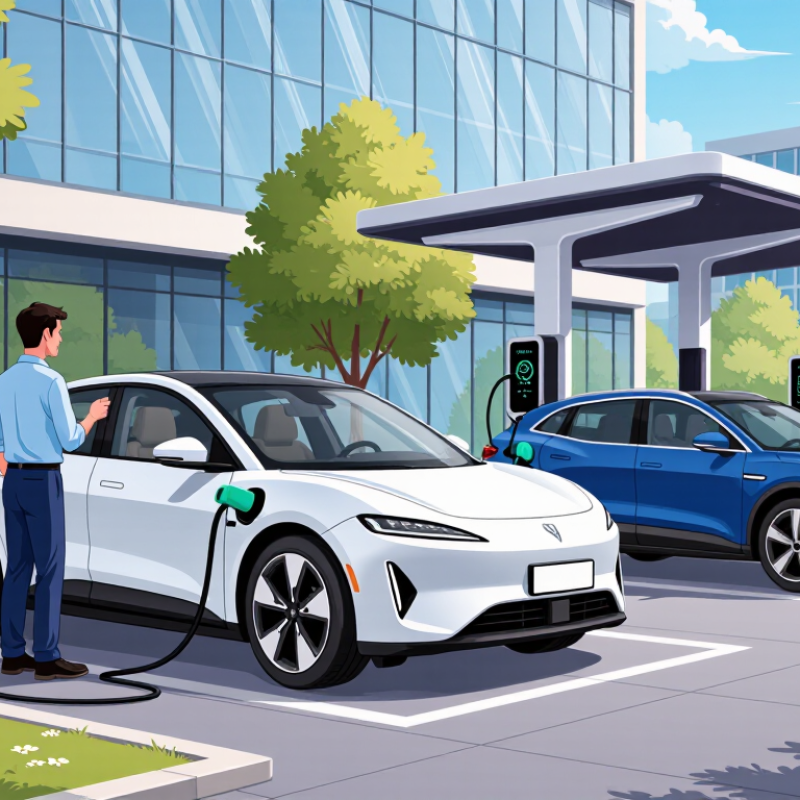
Understanding the Main Factors That Affect EV Charging Efficiency
How to Improve EV Charging Efficiency?
Understanding the Main Factors That Affect EV Charging Efficiency
Charging efficiency depends on more than the charger’s advertised power. The battery accepts energy at different rates during a charging session. At a low charge level, it may draw power quickly. Near full capacity, the system usually reduces current to protect the cells. This final stage can take much longer than expected. Less waiting.
Battery temperature also matters. Cold cells charge slowly and may require controlled warming first. Extremely hot cells can trigger cooling, which consumes additional electricity. Parking in a shaded area during summer can reduce thermal stress. In winter, charging soon after driving may improve acceptance because the battery is already warmer.
The vehicle’s onboard charger, cable condition, and electrical supply create further losses. An AC charger may deliver 7 kilowatts, but the battery will receive slightly less. Longer cables, poor connections, and undersized circuits can increase resistance and heat. A qualified technician should check unusual warmth or repeated charging interruptions. Measurements are not always perfect. Dashboard percentages can differ from energy-meter readings, and weather changes the results. Tracking charging time, delivered energy, and battery temperature across several sessions gives a more reliable picture. Leaving the vehicle connected after reaching the target level may also consume small amounts of power for monitoring and temperature control.
Choosing the Right Charging Equipment for Different EV Needs
Improving EV charging efficiency starts with matching equipment to the vehicle’s daily needs. The U.S. Department of Energy’s Alternative Fuels Data Center classifies Level 2 charging around 2–19.2 kW. For home users, a 7–11 kW AC charger usually supports overnight charging without excessive electrical upgrades. A larger unit may look better, but the vehicle’s onboard charger can become the bottleneck.
Think about use patterns.
An apartment garage needs load management, clear parking rules, and several moderate-power ports. A delivery fleet may need scheduled charging, durable connectors, and DC equipment during short operating breaks. Highway sites require higher-power DC chargers, but power often tapers as the battery approaches a high state of charge. Maximum output is not constant.
The International Energy Agency’s Global EV Outlook 2024 reports that global electric car sales exceeded 14 million in 2023, while public charging points surpassed four million. Demand is growing quickly. Still, installing the fastest equipment everywhere is not automatically efficient. It can increase grid costs, cooling requirements, and unused capacity. A field assessment should measure arrival times, dwell time, battery size, and local transformer limits. This is where many plans become imperfect. A charger selected from a specification sheet may perform poorly beside a busy workplace or in winter conditions. Monitor real energy delivered, not only rated power.
Optimizing Battery Temperature and Charging Conditions
How to Improve EV Charging Efficiency?
Battery temperature is central to charging efficiency. Lithium-ion cells generally accept energy best near 20–30°C. When cells are cold, charging power falls to protect the electrodes. When they are hot, thermal controls may slow charging or run cooling fans. The 2024 Global EV Outlook reports more than four million public charging points worldwide. Conditions vary widely, so temperature management cannot be treated as a minor detail.
Preconditioning helps. Start battery heating or cooling before fast charging, preferably while the vehicle is plugged in. This uses grid energy instead of battery energy. Charge in shade during hot weather, and avoid charging immediately after hard driving. The Alternative Fuels Data Center recommends following vehicle temperature guidance and limiting unnecessary high-power charging. It is practical advice, although real drivers do not always have time to follow it.
Cold weather deserves extra attention. An automotive association’s 2019 testing found average driving range dropped 41% at 20°F (-6.7°C) when cabin heating was used. That figure measures range, not charging loss, but it shows how strongly temperature affects energy use. Charging at a moderate state of charge can also help maintain speed. Reaching 80% is often faster than reaching 100%, while frequent full charging may increase battery stress. The simple rule is not perfect. Trip length, battery chemistry, and local weather still matter.
How to Improve EV Charging Efficiency? - Optimizing Battery Temperature and Charging Conditions
| Operating Condition |
Recommended Range |
Typical Charging Efficiency* |
Charging Impact |
Practical Optimization |
| Battery temperature |
20–35°C |
90–95% |
Lowest thermal losses |
Precondition the battery before high-power charging whenever the vehicle supports it. |
| Cold battery |
Below 10°C |
75–88% |
Power may be limited; heating consumes energy |
Begin battery heating before arrival at a fast charger and avoid repeated short charging sessions in very cold conditions. |
| Hot battery |
Above 40°C |
80–90% |
Cooling energy increases; charging may slow |
Allow the battery to cool after sustained driving and use shaded or ventilated parking where possible. |
| State of charge |
10–60% |
88–95% |
Higher charging power is usually available |
Use this range for time-sensitive fast charging and plan stops around the vehicle’s charging curve. |
| High state of charge |
80–100% |
80–90% |
Power commonly tapers to protect the cells |
Stop fast charging near the point where power drops significantly; complete charging at lower power when practical. |
| AC charging power |
3.6–11 kW |
88–95% |
Generally lower conversion and cooling losses |
Prefer overnight AC charging for routine use and schedule charging during lower-demand periods when available. |
| DC fast charging |
50–150 kW |
85–92% |
Higher current increases heat and conversion losses |
Use DC charging mainly for travel or urgent top-ups, and avoid charging at maximum power when it is unnecessary. |
| Ambient temperature |
15–30°C |
90–95% |
Moderate heating and cooling demand |
Charge in a garage or shaded area when outdoor temperatures are extreme. |
| Charging cable and connector |
Clean, dry, undamaged |
Up to 1–3% less loss |
Poor contact can create resistance and heat |
Keep connectors clean and fully inserted; replace damaged cables and avoid unnecessary cable extensions. |
| Charging schedule |
Finish close to departure |
Improves energy management |
Reduces time at high state of charge |
Set a departure time so the battery reaches the target level shortly before driving, especially in cold weather. |
*Typical charging efficiency values are general reference ranges for the energy delivered from the charging equipment to the battery. Actual results vary with battery chemistry, vehicle design, charger condition, cable length, state of charge, and ambient temperature.
Reducing Energy Losses During the Charging Process
How to Improve EV Charging Efficiency?
Reducing Energy Losses During the Charging Process
Every charging session loses some electricity as heat. The National Renewable Energy Laboratory reports that AC charging losses commonly range from 10% to 15%, depending on the vehicle, charger, temperature, and power level. That gap is easy to miss. A wall meter may show 60 kWh, while the battery receives less.
Temperature matters more than many drivers expect. Cold batteries need preheating before accepting energy efficiently. In one practical test, a winter session began slowly, with the first few minutes warming the battery instead of adding useful range. Parking indoors, when possible, can reduce this waste. Charging immediately after driving may also help because the battery remains warmer.
Charger maintenance matters too. Loose connectors, damaged cables, and poor ventilation increase resistance and heat. The U.S. Department of Energy recommends following equipment ratings and avoiding overloaded circuits. Use the lowest power that meets your schedule. Faster is not always better. A 2024 International Energy Agency report recorded more than 40 million electric cars on the road in 2023, making small efficiency gains significant at scale. Yet published loss estimates vary across test conditions. That uncertainty deserves more honest reporting. Charging data should show wall energy, battery energy, temperature, and session duration, not only charging speed. Regularly checking these figures can reveal a charger that quietly wastes electricity.
How to Improve EV Charging Efficiency?
Reducing Energy Losses During the Charging Process
The chart shows typical wall-to-battery efficiency levels across common charging power ranges.
Higher-power charging can reduce charging time, but thermal management, power-conversion losses,
cable resistance, and battery conditioning can affect overall efficiency. Maintaining suitable
battery temperature, using properly rated cables, and avoiding unnecessary preheating or cooling
can help reduce energy losses.
Using Smart Charging Strategies to Improve Overall Efficiency
How to Improve EV Charging Efficiency?
Using Smart Charging Strategies to Improve Overall Efficiency
Smart charging adjusts power delivery according to electricity demand, battery needs, and departure times. It avoids charging at maximum power every night. This can reduce household peak demand and limit unnecessary grid strain.
Set a realistic departure time in the charging app or vehicle system. For example, a 60 kWh battery may need only four hours at a 7 kW charger. Charging from midnight to 4 a.m. may be more efficient than starting at 6 p.m. Some electricity plans also offer lower overnight rates. Check the actual tariff, rather than assuming nights are cheaper.
Useful data matters.
Monitor energy use for several weeks. Compare charging time, energy delivered, and battery percentage gained. A sudden drop in efficiency may indicate cold weather, poor connections, or extra cabin heating. Smart systems can delay charging during local demand peaks. They can also combine charging with home solar generation when available.
Avoid charging to 100 percent without a clear need. Many daily trips require much less energy. A moderate target may reduce charging time and battery stress, but the best setting depends on the vehicle and its battery guidance. Forecasts can be wrong. Solar output changes quickly, and electricity prices may shift. Review automated schedules regularly, especially before long trips. Smart charging is helpful, but it should not replace practical checking.
Conclusion
Improving EV charging efficiency starts with understanding the factors that influence energy use, including the vehicle’s battery, charging power, temperature, and the condition of the charging equipment. Choosing a charger that suits the vehicle and its typical driving needs can help avoid unnecessary delays and energy losses. Keeping the battery within a suitable temperature range and charging under appropriate conditions can also support more consistent performance and help protect long-term battery health.
To understand how to improve charging efficiency for electric vehicles, drivers can reduce energy loss by using well-maintained equipment, limiting avoidable charging interruptions, and planning charging around their schedules. Smart charging strategies, such as charging when demand is lower and setting practical charging limits, can further improve how effectively electricity reaches the battery. Together, informed equipment choices, good battery care, and thoughtful charging habits make EV charging more efficient and dependable.

 Zap Charger